Faster response in
private washrooms.
Libraries are already carrying overdose-response reality. Brave adds a privacy-first detection layer, so staff can discover urgent incidents sooner and respond using their existing protocol.

Staff notified.
Aggregated from Brave-monitored library sessions; incident categories are staff-reported and may vary by local workflow.
Trusted by library systems and harm-reduction partners
How detection works in real time.
The flow is simple: door state confirms session start, occupancy is detected, threshold logic runs, then responders are notified.
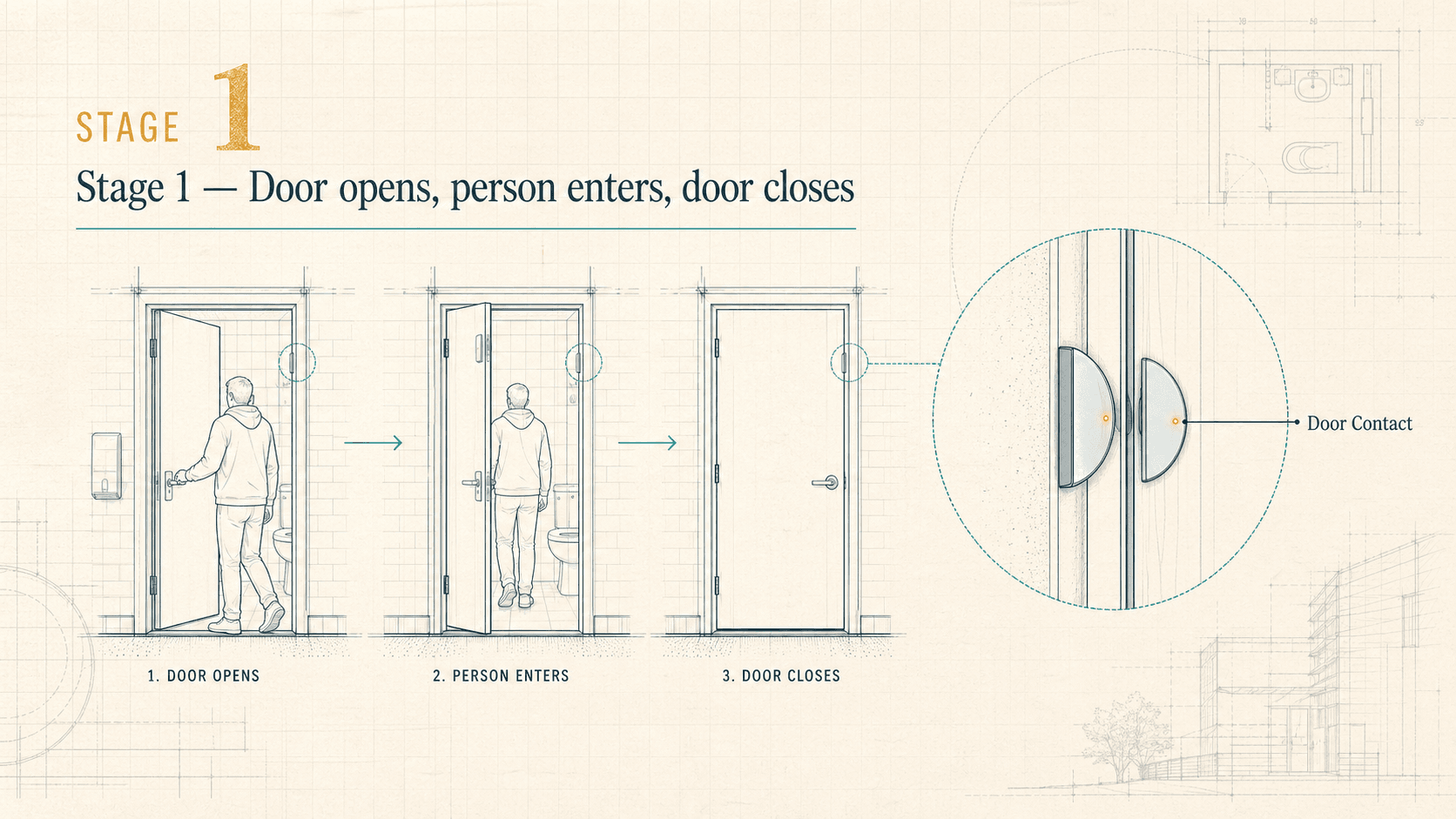
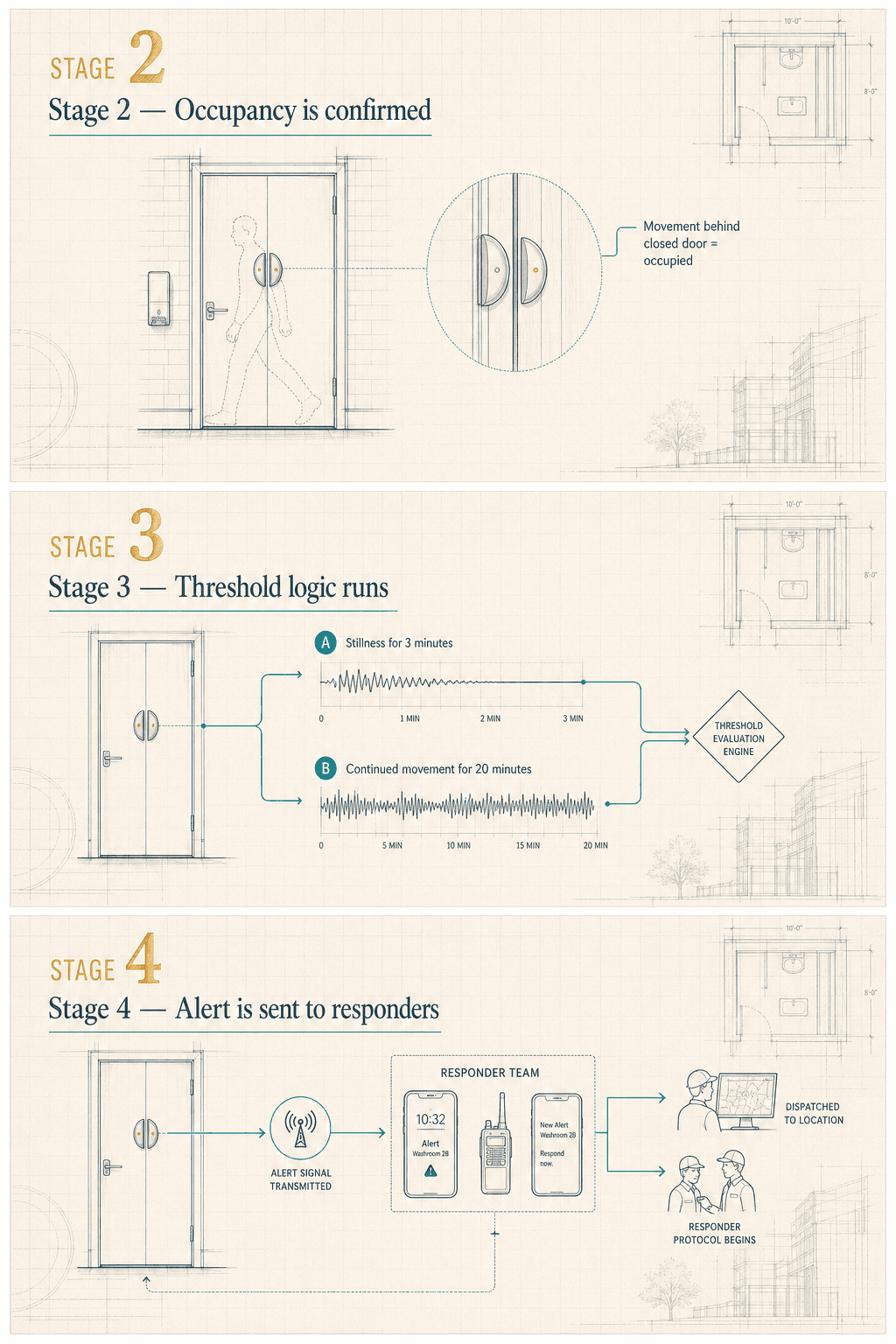
Monthly reporting is built in: washroom event summaries, overdose-response categories, alert timing, and sensor health are delivered in a board-ready package for funding applications and renewals.
What we don’t do
Safety doesn’t have to mean surveillance.
Brave was built for private-space emergencies where time-to-discovery matters. We support data-minimized, policy-led deployments designed for public-library privacy obligations and trust.
Access model: responder-only visibility, retention limits, and policy controls aligned to your privacy process.
- No cameras
- No audio
- No video recording
- No patron identification
- No facial recognition
- No sale of patron data
- No open staff-wide event feed

Case study
“Our challenge was not whether staff cared. It was whether we could discover a private-space emergency fast enough to act in time.”
Monthly reports summarize washroom events, response timing, and sensor health so leadership can maintain funding and track program performance over time.
Read the implementation story →What library leaders are asking for.
“If it compromises dignity, it does not work for a library. Privacy-first design was the deciding factor for our team.”
“Naloxone and training are critical, but the hardest part is discovering a private washroom emergency quickly enough.”
Monthly reporting
Board-ready evidence every month.
Every deployment includes recurring reporting for washroom incidents, overdose-response categories, acknowledgement timing, and sensor health. Teams use this package to support grant applications, renewal reporting, and internal budget decisions.
- Event summaries by room and alert type
- Median and distribution of response timing
- Sensor health, battery, and uptime checks
For procurement teams
Questions library buyers ask.
How is Brave priced?+
Typical starting point: $2,000 one-time setup plus $500 per sensor per year. We scope final pricing by washroom count, escalation design, and rollout plan.
What does installation require?+
No local Wi-Fi is required for the core sensor. Installation is usually straightforward (sensor + door contact, room naming, responder routing), followed by staff onboarding and protocol alignment.
What data is collected and who can access it?+
Deployments are designed around data minimization: operational event metadata (for example timestamps, acknowledgement, resolution category), not patron identity. Access is restricted to designated responders and administrators.
How does this fit MFIPPA and privacy reviews?+
Public-library boards in Ontario are covered by MFIPPA. We support privacy-first rollouts with no cameras or audio, signage templates, retention guidance, and implementation details that fit a formal privacy impact assessment process.
Do you support RFP processes?+
Yes. We provide an RFP package with technical architecture, security and privacy responses, implementation scope, support model, and reference workflows used in library procurement cycles.
How do monthly reports support funding and grant maintenance?+
Each month, teams get a structured summary of washroom events, overdose-response categories, alert acknowledgement timing, and sensor health. Libraries use these reports to support grant applications, renewals, board updates, and ongoing funder reporting.
Can we start with a pilot instead of system-wide rollout?+
Yes. Most libraries start with a bounded pilot at high-priority washrooms, then evaluate response metrics, staff workload, and policy fit before expansion.
See it in your library.
Start with a serious pilot plan. We’ll map high-priority washrooms, response protocols, privacy requirements, and rollout scope with your team.
Request a demo